


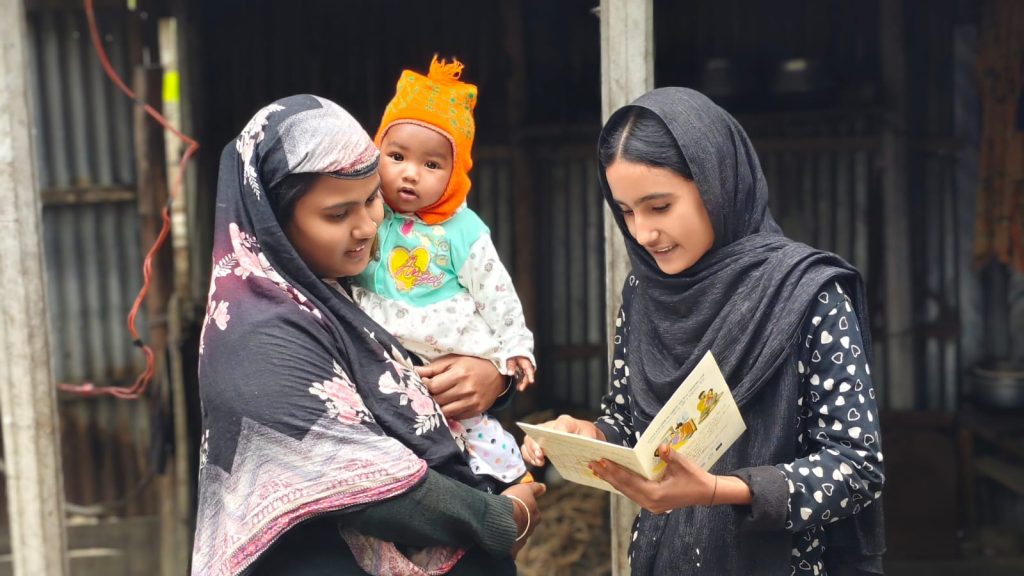
The Social Development Centre (SDC), Samajik Unnayan Kendra in Bangla, is a platform created by the PPEPP-EU project to unite adolescent girls and boys and engage them in community development efforts.
The young members of SDC engage in numerous social activities and gain knowledge through regular sessions with project staff on adolescent and women’s reproductive health, menstrual health management and hygiene, nutritious food, primary healthcare, and the health risks associated with child marriage and early motherhood.
They also acquire knowledge of contemporary issues such as climate change, dowry prevention, women’s rights and leadership development. The SDC members apply their learning to change perceptions and behaviours within their families and communities through social activities and knowledge sharing.
Disha is an SDC member from Gaibandha district who learned about these issues through her SDC club and improved her life skills and leadership capacity.
Now, she works to drive positive change in the lives of teenage girls and women in her community by disseminating information on primary health. She organises door-to-door discussions, especially with teenage girls and mothers about health and encourages them to seek healthcare.
Although she initially faced negative attitudes and obstacles from her family and community, Disha gradually overcame those challenges with the advice and support of her club. Currently, Disha coordinates with the local community clinic to provide basic health consultations and awareness talks to community members, and to refer when needed.
As a result of the consistent and sincere work of Disha and her club members, awareness of menstrual hygiene has increased in the village, teenagers have become interested in visiting health centres, and they have developed the courage and mutual trust to discuss their sensitive health issues. In Disha’s words, “There was a time when I did not know a lot about my health issues. Today, I talk to local community people about health care and available health facilities and they trust me. This trust is my biggest strength.”
The SDC members also engage in recreational and sports activities, such as traditional games, quizzes, writing competitions, library setup and book-reading sessions at the club premises. They often organise plantation, sapling distribution and blood-grouping campaigns in their community.
With the participation of over 10787 girls and boys, the project has formed 687 SDCs across its 145 operating Unions. Many of these club members have established 195 ‘Pushti Bagan’ (vegetable gardens) for household consumption, with technical support from project staff. PPEPP-EU aims to enhance SDC members’ skills in disseminating knowledge and raising awareness, especially on nutrition and primary health issues within their communities.