


The Pathways to Prosperity for Extremely Poor People – European Union (PPEPP-EU) project is being implemented in 12 districts covering 145 unions across 34 Upazilas to support 215,000 extremely poor households across Bangladesh. Implemented by 19 partner organisations, PPEPP-EU has three major components: resilient livelihood, nutrition and primary healthcare, and financial inclusion, with special focus on disability inclusion, women’s empowerment, disaster and climate resilience, and community mobilisation.
PPEPP-EU is a second-generation poverty graduation project and technically a continuation of the previously implemented “Pathways to Prosperity for Extremely Poor People (PPEPP)” project that was co-funded by the Foreign, Commonwealth & Development Office (FCDO) and the EU in 2019. Due to an early exit by FCDO in March 2023, the EU launched the PPEPP-EU project with the same target population to ensure its continuation. Therefore, the PPEPP-EU project has been conducting Results-Based Monitoring (RBM) each year, since 2021, to evaluate progress and results, identify deviations from the project plan and constraints, and assess the efficiency and effectiveness of the inputs. This newsletter presents the cumulative findings over these years, highlighting both successes and areas requiring continued attention.
The RBM uses an Activity to Output Monitoring (ATOM) approach to measure progress towards target outputs by tracking time-based, cumulative progress for the project components and special focus areas. The ATOM data is then combined and weighted at various levels to provide a progress for all components, partners, and working areas, as well as an overall achievement for the project. The PPEPP-EU project uses a survey questionnaire, developed based on the project’s results chain, to collect household data on outcomes and impacts in income, expenditure, nutrition, resilience, and empowerment. Together, these tools provide a balanced picture of project performance.
Output-level Achievements
The ATOM framework shows strong progress across all components. By 2025, nearly all indicators had surpassed 90% achievement:
• Resilient Livelihoods: 94%
• Nutrition and Primary Health Services: 99%
• Disability Inclusion: 100%
• Women’s Empowerment: 96%
• Community Mobilisation: 100%

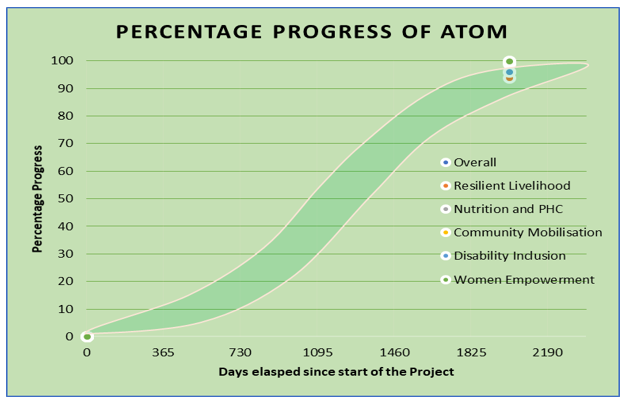
Figure 1: The ‘S’ curve showing overall progress on outputs in RBM 2025.
The overall ATOM score stands at 96%, confirming that project activities have been implemented effectively and consistently. The operational side of the project is functioning well, with strong performance in service delivery and community engagement.
Outcome-level Results
Household-level outcomes provide further evidence of progress:
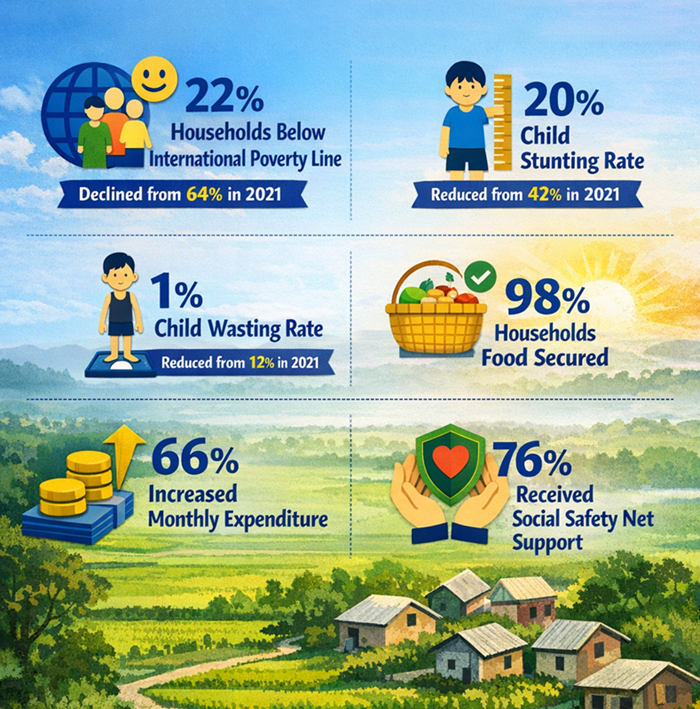
• Household Expenditure: In 2025, 66% of households reported increased monthly expenditure compared to 2021.
• Savings: Household savings rose from BDT 2,431 in 2021 to BDT 19,908 in 2025, an eightfold increase.
• Climate Adaptation Capacity: Improved from 9% in 2021 to 68% in 2025.
• Food Security: Increased from 76% in 2021 to 98% in 2025.
• Household Dietary Diversity Score (out of 12): Increased from 6.2 in 2021 to 8.0 in 2025.
• Percentage of children under two years of age who were exclusively breastfed: Increased from 79% in 2021 to 93% in 2025.
• Proportion of program participant women demonstrating increased empowerment and household decision-making authority (food purchasing, children’s education and marriage, control over resources): Increased from 25% in 2021 to 55% in 2025.
• Proportion of households in the target communities that have access to community clinics and other local health facilities for primary healthcare services: Increased from 93% in 2021 to 99% in 2025.
• Percentage of households in the target communities that have access to nutrition-sensitive agriculture extension services: Increased from 54% in 2021 to 97% in 2025.
• Proportion of extremely poor households in the target communities that have actually received government social safety net support: Increased from 33% in 2021 to 76% in 2025.
These findings highlight strong progress in financial security, food security, climate adaptation, and access to public services.
Impact-level Results
At the impact level, the RBM results demonstrate significant improvements in long-term indicators:
• Poverty Reduction: The proportion of households below the international poverty line declined from 64% in 2021 to 22% in 2025.
• Child Stunting: Reduced from 42% in 2021 to 20% in 2025.
• Child Wasting: Reduced from 12% in 2021 to 1% in 2025.
• Climate Resilience: Increased from 33% in 2022 to 81% in 2025.

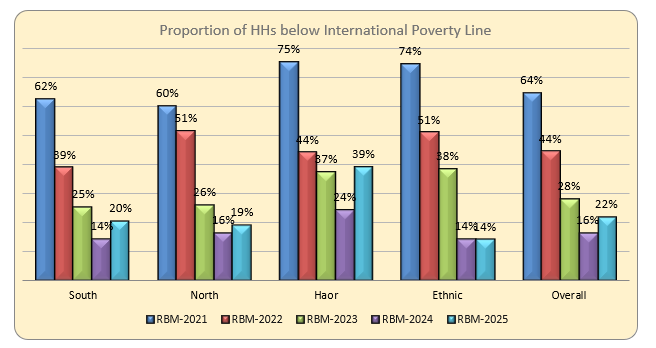
Figure 2: Proportion of households below the International Poverty Line.
These results show long-term progress in poverty reduction, nutrition, and resilience.
Overall Assessment
The fifth round of RBM confirms that PPEPP-EU is delivering significant improvements across all logframe indicators. Poverty has been reduced, nutrition outcomes have improved markedly, climate resilience has expanded, and savings have increased substantially. Women’s empowerment and disability inclusion are firmly embedded in project activities.
Looking Ahead
Sustaining and deepening these gains will require continued focus on resilience. Strengthening market access, supporting climate adaptation, and encouraging households to invest savings in productive activities will be critical. Ongoing attention to women’s empowerment and disability inclusion will ensure equitable progress. Addressing external shocks through policy and programmatic measures will help protect households from reversals in poverty reduction.
Conclusion
The PPEPP-EU project demonstrates that with targeted support, extremely poor households can achieve lasting improvements in livelihoods, nutrition, and resilience. The RBM 5th Round findings provide clear evidence of progress over the first round, while also highlighting the need to safeguard gains against external challenges. The project continues to build pathways to prosperity, ensuring that households are better prepared for the future.