

Sajeda Begum (28) lives with her family in a small tin-shed house built on a piece of Khas (government) land beside the embankment of the fast-flowing Tetulia river in Char Kalmi Union. This is one of the most remote Unions, located in the southernmost part of Char Fashion Upazila in Bhola district. River erosion is a daily reality along the bank of the Tetulia river. Life here is a constant struggle for survival as people endure generations of hardship caused by river erosion, floods, tidal surges, and cyclones.
Sajeda’s husband, Hanif (32), is the only earning member in their six-member family, including two sons, one daughter and Hanif’s mother. They do not own any land. For years, Hanif has been buying fish from the local market and selling them on foot from village to village. Due to the remoteness of the area and rising commodity prices, Hanif’s income was barely enough to meet the family’s daily needs.
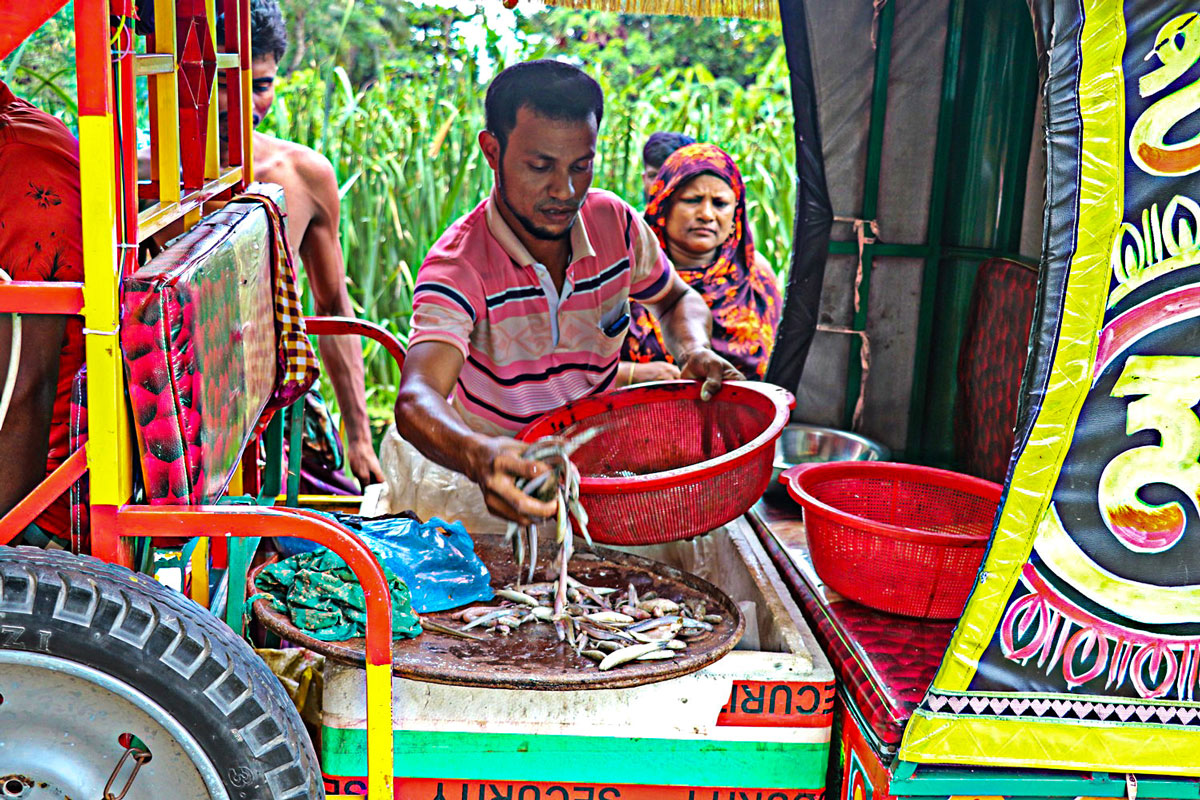
Recognising her vulnerability, PPEPP-EU supported Sajeda and Hanif with a BDT 69,000 loan and a project grant. They bought a battery-run auto-rickshaw and essential materials and received technical advice from project staff to help establish a mobile fish-vending business.
Previously, by selling fish on foot, Hanif earned 1,500-2,000 BDT per day, with a profit of 400-500 BDT. With the mobile fish market, he sells around BDT 6,000-7,000 daily and makes a profit of BDT 1,200-1,500 by selling fish in distant villages. With his auto-rickshaw, Hanif now buys fish directly from wholesale markets at lower prices, which significantly increases his profit margin.
Beyond fish trading, Sajeda has diversified her livelihood. She sells dried fish, raises cows, goats, and poultry, and grows vegetables around her homestead for both household consumption and sale. She has also ensured her children’s education- her eldest son is now in second grade, and her middle son is in first grade. She continues to save money and hopes to take another loan after repaying the current instalments to further expand their business.
Their improved financial condition has also earned them social recognition and status in the community, as they get invited to social events. Sajeda’s husband also consults her on important household matters and her opinions are valued in family decision-making. Reflecting on her journey, Sajeda shared, “I used to hear about dreams. Now, I have turned my own dream into reality.”