
CONTEXT
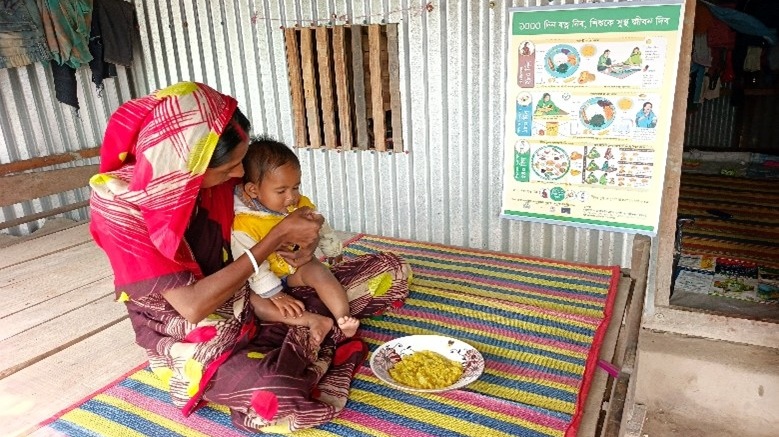
Jamila, an eight-month-old girl of Zahida Begum (26)- a project member from Patuakhali district’s Galachipa Upazila, was struggling with moderate malnutrition, as diagnosed by PPEPP-EU’s field staff during a household visit last year. Like many other families in rural communities, Zahida and her family members were completely unaware of the severity of Jamila’s health condition.
CHALLENGES
When Jamila was first assessed for Moderate Acute Malnutrition (MAM), project staff identified that inappropriate feeding practices were contributing to her condition. However, Zahida had little knowledge of appropriate child-feeding and nutrition. She did not know which foods were appropriate for her child’s age, how much to feed her, or how to prepare nutritious meals for her child. Jamila was also not given separate, nutritious meals and all of this led to her poor appetite, slow weight gain and growth. This gap in knowledge of age-appropriate nutrition and in feeding practices for infant and young children is a great challenge faced by many extremely poor families.
PROJECT INTERVENTION
To address this issue, the PPEPP-EU project organises Infant and Young Child Feeding (IYCF) demonstration sessions in the community for Zahida and other mothers and family members. These sessions are aimed at familiarising mothers with different food groups, demonstrating appropriate cooking methods and discussing the importance of balanced diets for family members of all ages. Participating mothers also learn about essential nutrients for children’s growth and disease prevention, as well as techniques for preserving the nutritional value of food during cooking.
At the IYCF demonstration session, Zahida learned to select and prepare nutritious, age-appropriate meals for her daughter. She gained hands-on knowledge of cooking low-cost, nutrient-rich dishes, such as ‘Pusti Halwa’ and ‘Pusti Khichuri’, which are essential for the growth of malnourished children. Applying this knowledge at home, Zahida began feeding her daughter regularly with improved meals. Over the next three months, Jamila’s weight improved significantly and she looked healthier than before.
TESTIMONY
With improved diet and feeding practices, Jamila became more active and healthier. Reflecting on her experience, Zahida shared, ‘No one explained the importance of proper food preparation- washing vegetables before cutting, using rice starch instead of discarding it, covering the food while cooking and preparing balanced meals regularly. Thanks to the PPEPP-EU project, we now understand and practice these techniques.’
WAY FORWARD
The good practices from the PPEPP-EU’s IYCF demonstration sessions extend beyond individual households, as mothers like Zahida are sharing their knowledge with others in their communities. As more mothers now adopt improved nutrition, feeding and hygiene practices, more children are benefiting from better nutrition and healthier growth.